
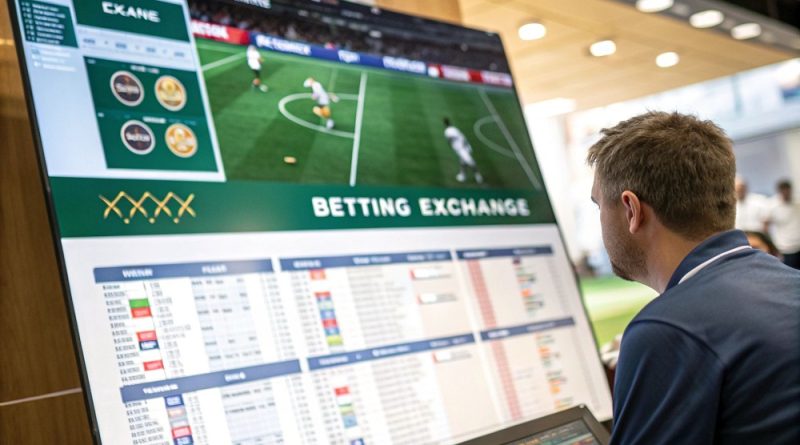
Understanding Market Liquidity in Betting Exchanges
Traditional sportsbooks require bettors to play against the house, which sets the odds and takes the opposite side of every wager. Betting exchanges, however, operate on a peer-to-peer model. Instead of buying a price determined by a bookmaker, users bet directly against other individuals. For this ecosystem to function efficiently, it relies entirely on a concept known as market liquidity.
Liquidity is the lifeblood of any financial or betting exchange. Understanding how it works, how to measure it, and how it directly impacts betting strategies is essential for anyone looking to transition from traditional sportsbooks to peer-to-peer wagering platforms.
What Is Market Liquidity in a Betting Exchange
Market liquidity refers to the volume of money available in a specific betting market that allows bettors to match their wagers instantly at their desired odds. Because a betting exchange does not take the risk themselves, every single bet requires two matching sides: a backer (someone betting an event will happen) and a layer (someone betting an event will not happen).
When a market is highly liquid, it means there is a massive pool of money waiting to be matched on both sides of the wager. If you want to place a one hundred dollar bet on a specific outcome, a liquid market ensures someone else is immediately available to accept the opposite side of that position.
In contrast, an illiquid market lacks available funds. If you attempt to place a wager in a low-liquidity market, your bet will remain unmatched or only partially matched, meaning your money sits idle until another user decides to take the other side of your proposition.
The Core Components of Liquidity
To visualize liquidity on an exchange, you must look at the market depth, which is typically displayed via an order book or an odds grid. This layout breaks down into three core elements.
The Spread
The spread is the difference between the best available back odds and the best available lay odds for a given selection. In highly liquid markets, this gap is minimal, often representing just a single tick increment. In illiquid markets, the spread widens significantly, forcing bettors to accept poor value if they want their wagers matched immediately.
Market Depth
Market depth indicates the total amount of money waiting in the queue at various price points. Beneath the main odds displayed on the screen, exchanges show the specific dollar amounts available at those exact odds. Deep markets have thousands of dollars waiting at multiple price increments, while shallow markets show double or single-digit figures.
Unmatched Bets
When you submit a bet at odds that no one is currently willing to accept, your wager becomes an unmatched bet. It sits in the order book as an open offer. If the market moves or a new bettor enters the exchange looking for that exact price, your bet will convert into a matched bet.
Why Liquidity Matters to Bettors
Liquidity fundamentally dictates how much value a bettor can extract from an exchange. Without sufficient volume, the core advantages of peer-to-peer betting disappear.
Guaranteeing Better Odds
The primary appeal of betting exchanges is the elimination of the bookmaker margin, often referred to as the vig or juice. Traditional sportsbooks bake a five to ten percent margin into their prices to ensure profitability. Exchanges charge a small commission only on net winnings, allowing the actual odds to trade closer to true probability. However, this advantage is only realized if high liquidity forces the back and lay prices closer together. High volume drives competition among layers, tightening the spread and offering bettors the absolute highest possible returns.
Flexibility and Order Execution
In a liquid environment, you can enter and exit positions with absolute freedom. If you practice sports trading, which involves buying and selling positions as odds fluctuate during a live match, high liquidity ensures you can cut your losses or lock in a profit instantly. In a low-liquidity market, trying to exit a position during live play is incredibly risky because there may be no money available to match your trade, leaving you trapped in a losing wager.
Stakes and Bet Limits
Traditional bookmakers are notorious for limiting or banning winning players. Betting exchanges welcome winning players because the platform makes money on commission regardless of who wins. However, your maximum stake on an exchange is inherently restricted by the available liquidity. If a market only has five hundred dollars of liquidity at a specific price, you cannot place a five thousand dollar bet at that price. High liquidity accommodates high rollers and professional syndicates by allowing large sums of money to clear without drastically warping the market price.
Factors That Influence Liquidity Levels
Liquidity is not uniform across all sports, events, or timeframes. It fluctuates dynamically based on several real-world variables.
-
Profile of the Event: High-profile events like the Super Bowl, English Premier League matches, or major tennis finals naturally attract millions of dollars in volume. Conversely, lower-tier leagues or niche sports suffer from low liquidity because fewer participants are actively trading those markets.
-
Time to Event Maturity: Liquidity builds over time. A market opening a week before a football game will feature very low liquidity initially. The vast majority of money enters the market in the final two hours before kickoff, peaking right as the event starts and during live play.
-
Live In-Play Broadcasting: Events televised globally experience a massive surge in liquidity once the whistle blows. Live traders react to the action in real-time, injecting continuous capital into the backing and laying pools.
The Role of Market Makers in Building Liquidity
New or niche betting exchanges often face a classic chicken-and-egg problem: bettors will not use the platform if there is no liquidity, but liquidity will not appear without active bettors. To solve this, exchanges rely on market makers.
Market makers are institutional traders, algorithmic syndicates, or internal automated bots that continuously inject liquidity into the order book. They do this by simultaneously placing back and lay orders across various price points. By constantly offering prices on both sides of the market, they ensure standard retail bettors always find a counterpart for their wagers. Market makers profit by capturing the tiny spread between the back and lay prices thousands of times per day. Their presence is vital for maintaining stability and preventing extreme price volatility.
Frequently Asked Questions
What happens if my bet remains completely unmatched when the event begins?
If you place a bet with specific odds that nobody accepts, and you do not select the option to keep the bet live during in-play trading, the exchange will automatically cancel the wager the moment the event starts. Your stakes are immediately returned to your account balance with zero penalties or fees.
Why do some markets have high liquidity for backing but low liquidity for laying?
Liquidity relies on human perception and capital flow. If the general public heavily favors a massive underdog to lose, there will be an overwhelming amount of money looking to lay that team. If very few people want to take the risk of backing that underdog at the current price, the pool of money on the backing side will look incredibly thin by comparison.
Can a single bettor artificially manipulate the liquidity of a market?
In low-volume, illiquid markets, a wealthy trader or syndicate can manipulate prices by placing large unmatched orders to create a false impression of market sentiment. This can scare retail traders into shifting their prices. However, in highly liquid markets, the volume is far too massive for a single individual to manipulate the market effectively.
Is liquidity higher in traditional sportsbooks or betting exchanges?
Traditional sportsbooks present the illusion of infinite liquidity because they instantly accept large bets up to their house limits. However, they control the pricing entirely and build heavy margins into those limits. Betting exchanges rely on peer-to-peer volume, meaning their visible liquidity might look smaller upfront, but the overall value and price accuracy are vastly superior when major volume is present.
How does commission affect the net liquidity value for a bettor?
While liquidity determines the raw odds you can get, the exchange commission eats into your final payout. When calculating the true value of a liquid market, you must deduct the commission rate (typically between two and five percent of winnings) from the odds to see if the peer-to-peer price genuinely beats a traditional sportsbook offering.
Does in-play betting increase or decrease overall market liquidity?
In-play betting significantly increases overall liquidity, often dwarfng the pre-match volume. The fast-paced nature of live sports causes odds to shift rapidly, prompting automated trading algorithms and casual fans to continuously enter new positions, which rapidly recycled capital back into the market ecosystem.

